Live Video Performance Art: Summer 2013
OART-UT 567
Week 6: Final Project Exhibition
All video assignments created by Live Video Performance Art Students can be seen on the course Vimeo page:
https://vimeo.com/livevideoperformanceart
Final Projects:

Tisch Special Programs Equipment: 3,5000 Lumen Projectors!

“Revolution Through the Window” by Dimitri Lomonaco

“Eyes and Lips” projection mapped live mix by Carly Ganz

“Eyes and Lips” projection mapped live mix by Carly Ganz

“Eyes and Lips” projection mapped live mix by Carly Ganz
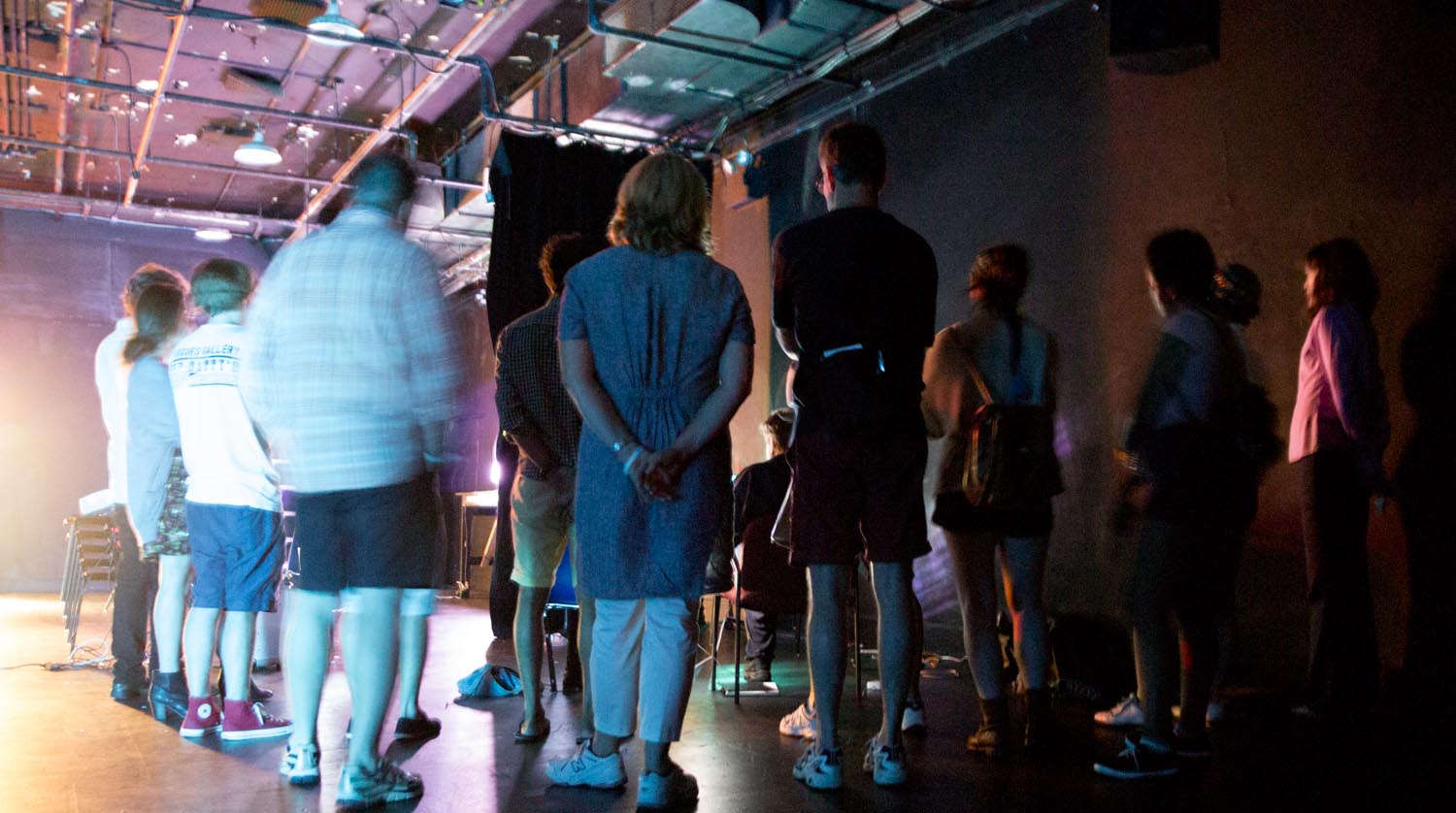
Final Exhibition Audience
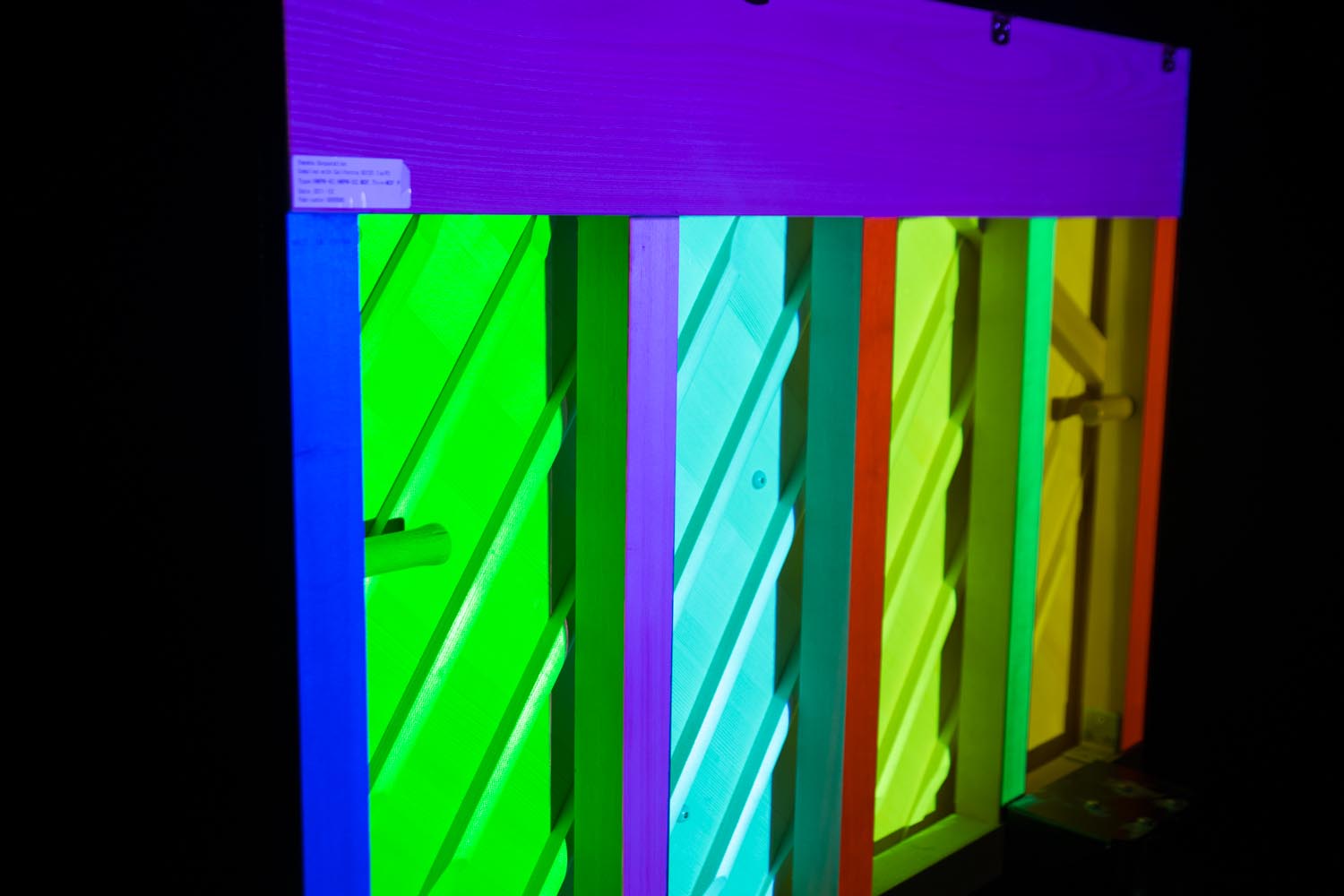
“Piano Mappin” by Enayet Kabir

“Piano Mappin” by Enayet Kabir

John Shankman: Artist Statement

“Blackhole” by John Shankman

LVPA2013: Table Mapping

LVPA2013: The END
Video Assignments on Vimeo
Video assignments created by Live Video Performance Art students can be watched here:
Week 5: Preparation and Production
Week 5 Writing Assignment:
Compose an artist’s statement to accompany your final project presentation. How does your piece exist “outside of the frame?”
Post your artist’s statement on the course blog.
Week 5 Video Assignment:
Prepare your final project for exhibition.

Mark Read: Social Change through Media

Mark Read: The Illuminator

The Illuminator: NY Loves Boston

Frame Dealer: VJ’s for Benny Benassi

Frame Dealer’s Audio Interface

Frame Dealer’s Midi Controller

Frame Dealer’s Rider: LED Wall Mapping

Frame Dealer at Coachella

Video Assignment Presentations: Dimitri Lomonaco

Resolume Avenue on PC
3D Technology
If you look at an object near you and close your left and right eyes in turn, you’ll see that each has a slightly different view of the world
Your left eye sees a bit more of the left side of the object, and your right eye sees a bit more of its right side. Your brain fuses the two images together allowing you to see in three dimensions. This phenomenon is known as stereoscopic vision.
In old fashioned 3D films, footage for the left eye would be filmed using a red lens filter, producing a red image, and footage for the right eye would be shot using a blue filter, resulting in a blue image. Two projectors then superimposed the images on the cinema screen. By wearing special glasses with a red filter (allowing only the red image through) in the left eye and a blue filter in the right (allowing only the blue image through), the viewers brain would then combine these two slightly different images to create the illusion of 3D.
Modern 3D films use a very similar technique, respectively using vertically and horizontally polarized light for each eye rather than the red and blue components of each image. Viewers still need special glasses, this time with polarized filters in each eye rather than color filters.
On the other hand, the technology used for projection mapping instances that exhibit 3D illusions is completely different. For this kind of 3D effect, there is only one original camera angle to begin wit for the original content, therefore there is only one physical position (which is actually the same as the virtual camera angle for the original content) from which 3D illusions can be created through the manipulation of perspective.
-Enayet Kabir
Repetition in Art
Remixthebook explores the use of repetition in art in this “sample based” era that we live in through the use of structure similar to a DJ or Vj remix. This exploration brought to light many interesting aspects of the artistic device of repetition and I am now attempting to place that understanding in the context of visual art.
Repetition can be used in the arts to create emphasis, set up structure for comparison, show the passage of time, unify disparate elements or develop an underlying pattern. Traditionally, the rules of composition state that the human eye prefers odd numbers, off-centre focal points, asymmetry, and curved lines rather than straight.
Here is an example illustrating the use of this device. An all over repeated pattern, such as on wallpaper, does not allow the viewer’s eye to rest on a specific focal point for very long and will therefore not sustain interest for very long. This very concept can be taken and reapplied to conversely create focus and sustain interest through the use of contrast by juxtaposition. If something anomalous is placed on top of a repeated wallpaper-like-pattern it would immediately become the focal point of a viewer. Get a pen and paper, or your computer, and try it out yourself!
-Enayet Kabir
Critique of “Journey”
Journey is an indie video game game released by Thatgamecompany in March 2012. The objective of the game is built completely around intuition, with no dialogue, text or spoken language of any sort used in order to give directions to the player. This unique approach to the video game provides for an extremely emotional playing experience and immerses players in an immersive and interactive piece of video art.
You should watch this trailer for the game to get a general feel for it:
The game is set in a surreal desert landscape that foregoes elaborate environments for a more minimal aesthetic that utilizes subtle variation through colors between the red and blue spectrum and through the use of very intricate textures.
The game allows you to control an amorphous humanoid creature that is traveling through a vast desert towards a mountain in the distance. Through online integration, other players that are on the same journey can be discovered and players can meet and assist each other. However, players cannot see each other’s names and they cannot communicate through speech or text. The only form of communication between two players is through musical chimes that each player can launch and control the dynamic of through their physical movement in the game.
This same chime also transforms dull, stiff pieces of cloth found throughout the levels into vibrant red with a golden glow and allows the player to interact with different objects in the game world. Players often end up developing their own primitive gesture systems to communicate with each other as well.
The beauty of this game lies in the limited amount of control options that the player has, because it is this very limit that gives birth an entire realm of expression that that opens itself as a very quick and pleasant surprise. My favorite aspect of the game is the simple audiovisual interaction between the chime noises and the player’s visual movement. Although the game takes only about an hour to complete once you know how, one can explore endlessly and will definitely be tempted to do so. The point of the game is the journey, not the destination.
-Enayet Kabir
Week 4: Concert Visuals, 3D Mapping, and Projection Installations.
Week 4 Writing Assignment:
Write a proposal for your final project. Post your proposal on the Course Blog.
Week 4 Video Assignments:
Create and record an original 5 – 10 minute video performance accompanied by your favorite music using the video loops and video art assignments produced so far by the class. Post your video performance to the course Vimeo page.

Energy Visualization

Paul Clay

John Ensor Parker

Double Stacked Projectors

Soft Edge Blending

Mad Mapper

Soft Edge Blending

Lab Time
Three-Dimensional Video Technology – John Shankman
The technological differences between 3D computer-driven animation like that in Avatar, and 3d projection mapping are often very misunderstood. To put it very simply, 3-D movies display a slightly altered image on to a standard flat (“2-Dimensional” one could say) projection screen which, with the help of various types of 3D glasses, provides the viewer with an enhanced sense of depth perception. By basically superimposing two nearly-identical images with slightly different perspectives and completely different polarizing filters on the screen at the same time, one can simply wear a pair of glasses where each lens contains one of the two different polarized filters. This causes each eye to see a different image. The real life consequence of this is the optical illusion of three-dimensionality, or really increased depth perception.
This differs greatly from the technology involved in 3D projection mapping. Instead of trying to make a 2D image on a 2D screen appear three dimensional, projection mapping quite literally takes three dimensional objects in the real world and turns them into display surfaces for video projection. This produces a very different product than 3D movies. In Avatar, a viewer might sit there and then suddenly feel like an ephemeral rock is being thrown at their face because the director decided that it would add to the scene. With projection mapping, there is a constant tangible three-dimensional product that can be viewed from different angles and without the need for any sort of spectacles. For example, one might project a video into the corner of a room and map it so that when standing in a certain spot the seam of the wall is completely unseen, a sort of odd optical illusion. The technology used to create 3D movies like avatar could never produce such a convincing optical illusion, nor that sort of illusion at all.
3D Technology: Avatar x Projection Mapping
The 3D technology used in Avatar is based on the creation of 3D elements through different 3D capturing and generating image equipment. Firstly, the use of the 3D cameras capable of capturing two different images which are eye distant one from the other making use of the early ideas of stereoscopy. Also, the need of a polarized 3D system which is composed basically of polarized glasses and a specific screen. The glasses enable the eye to apprehend the sense of depth that the polarized image suggests, making each eye receive different visual information so to make possible the binocular vision of the scene. As for movie theaters, screen must attend some specifications to enable the polarized effect reached by colors to work.
The 3D illusion achieved by projection mapping is a little different. Initially, it does not use the same 3D capturing devices and does not necessarily need 3D software to exist. This form does not subject viewers to the use of glasses to apprehend its depth. The basic and most important element of projection mapping is the surface on which the image is been projected. The many different surfaces varying in composition(nature), shape, size etc. which are potential screens to the use of projection mapping enable the illusion of depth created by this technology.
However, both share the same condition. Being virtual, they are computer based and dependent of technology, they don’t exist by themselves. They need electronic tools to make their transition to actual reality.
Dimitri Lomonaco
Week 3: Video Art
Reading:
Video Art
Experimental Film and Video: An Anthology
See blackboard for this week’s online reading assignments.
Week 3 Research Assignment:
Watch this video:
Week 3 Writing Assignment:
What is the difference between the technology involved in 3-D movies like Avatar and 3D the technology involved in 3D Projection Mapping?
Answer this question in less than one page.
Week 3 Video Assignment:
Create a 2 to 5 minute work of art using any camera. Explore performance art, and use camera tricks. Digitize and upload your piece to the course Vimeo page.

Tripple Projection Blend at the New York Historical Society Museum and Library

Jeanne Angel

The Historical Society nyc

Zarah Cabañas, Lady Firefly

